
From the historical survey to the site handover — a complete seven‑step mission, documented and coordinated.
02. Diagnosis & preliminary study
Reading the fabric, identifying pathologies, historical research and analysis of regulatory constraints: local protection plans, ABF, protected areas.
03. Design & preliminary project
Define the brief, select materials and techniques consistent with the existing building, sketches and schematic design (APS).
04. Approvals & heritage dialogue
Prepare DP or PC application files, liaise with the Architectes des Bâtiments de France and follow DRAC consultations.
05. Technical specifications
Write the CCTP, lot‑by‑lot descriptions and execution drawings.
06. Tendering & contractor selection
Select qualified craftsmen, compare offers and advise on decisions based on quality and durability criteria.
07. Project management & handover
Weekly site supervision, coordination of works, meeting minutes, resolution of defects and final acceptance.
01. Survey & record
Understand the history before designing the future. Architectural surveys, plans, sections, elevations and detailed documentation of the existing building.
Our method
From the historical survey to the site handover — a complete seven‑step mission, documented and coordinated.

Projects
Centuries
Years
50+
XVIIe - XXe
11
Areas of intervention
Façades and exterior restoration
The longevity of a building begins with analyzing its envelope: material types, pathologies, compatibility of coatings and the hygrothermal behaviour of walls. Plaster coatings, lime renders, thermal correctors, ashlar stone, timber framing, mouldings and polychromy. Work in protected sectors, within ABF perimeters and on listed buildings, with a careful reading of the façade in its street context and support for Heritage Foundation (Fondation du Patrimoine) label applications.
Roofs and timber frames
Make the building watertight without altering its historic silhouette. Slate, tile, lead and historic carpentry. Zinc — often required by regulations — is worked to remain as discreet as possible. Treatment of chimneys, valleys, eaves and interfaces with masonry; integration of vents with bespoke profiles.
Structural strengthening
Underpinning, vault consolidation, reinforcement of old floors and creation of tie‑beams require a precise understanding of the existing structure’s behaviour. Thorough preliminary diagnosis; compatible materials: Roman concrete, brick, steel and oak.
Exterior joinery
Windows, doors, shutters and blinds are the link between inside and outside and mark the building’s evolution through the centuries. Restoration of existing elements is always considered before replacement: fittings, locks, interfaces with masonry. Timber species, profiles, glazing bars and glass are chosen according to technical constraints, appearance requirements and heritage prescriptions.
Interiors and finishes
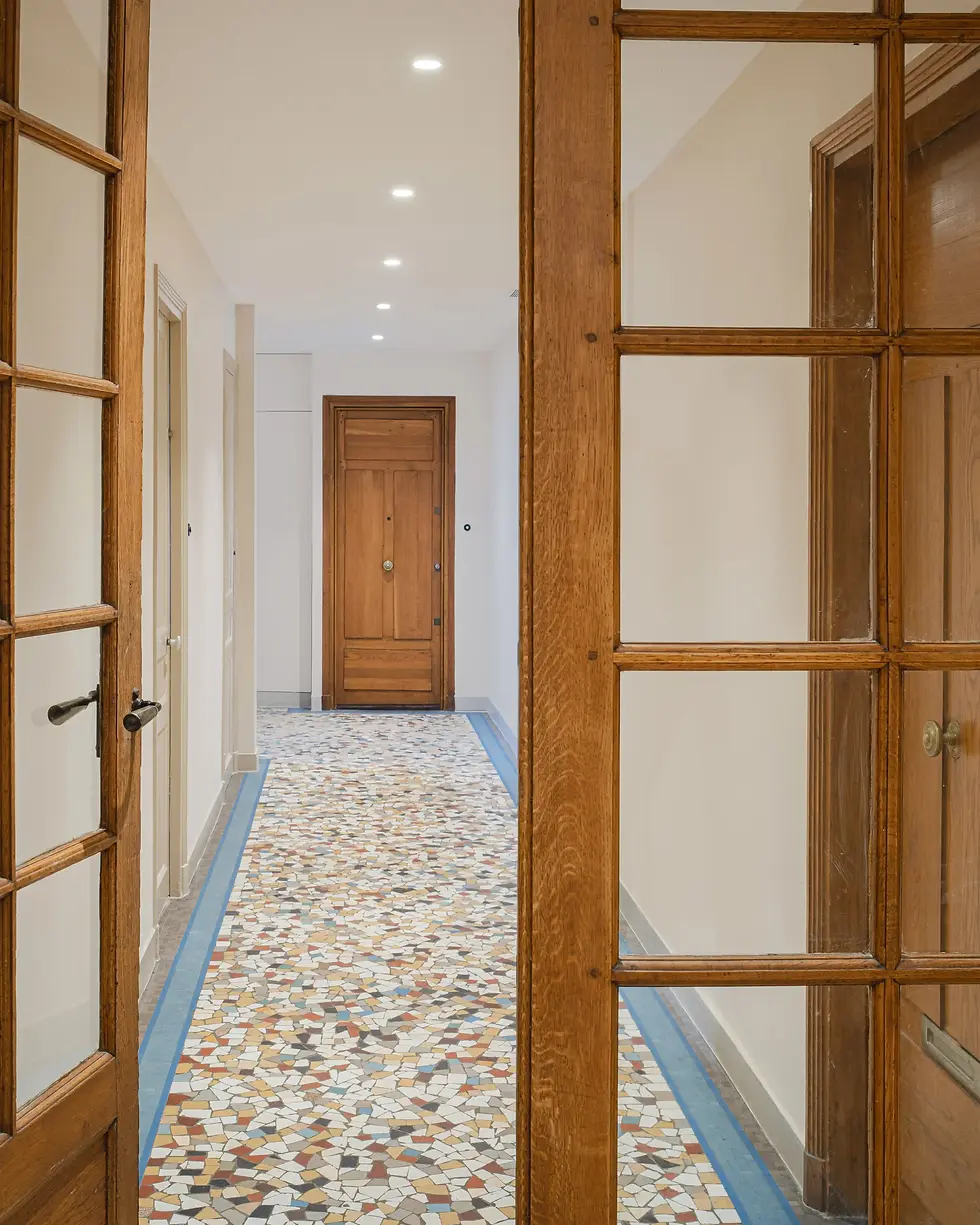
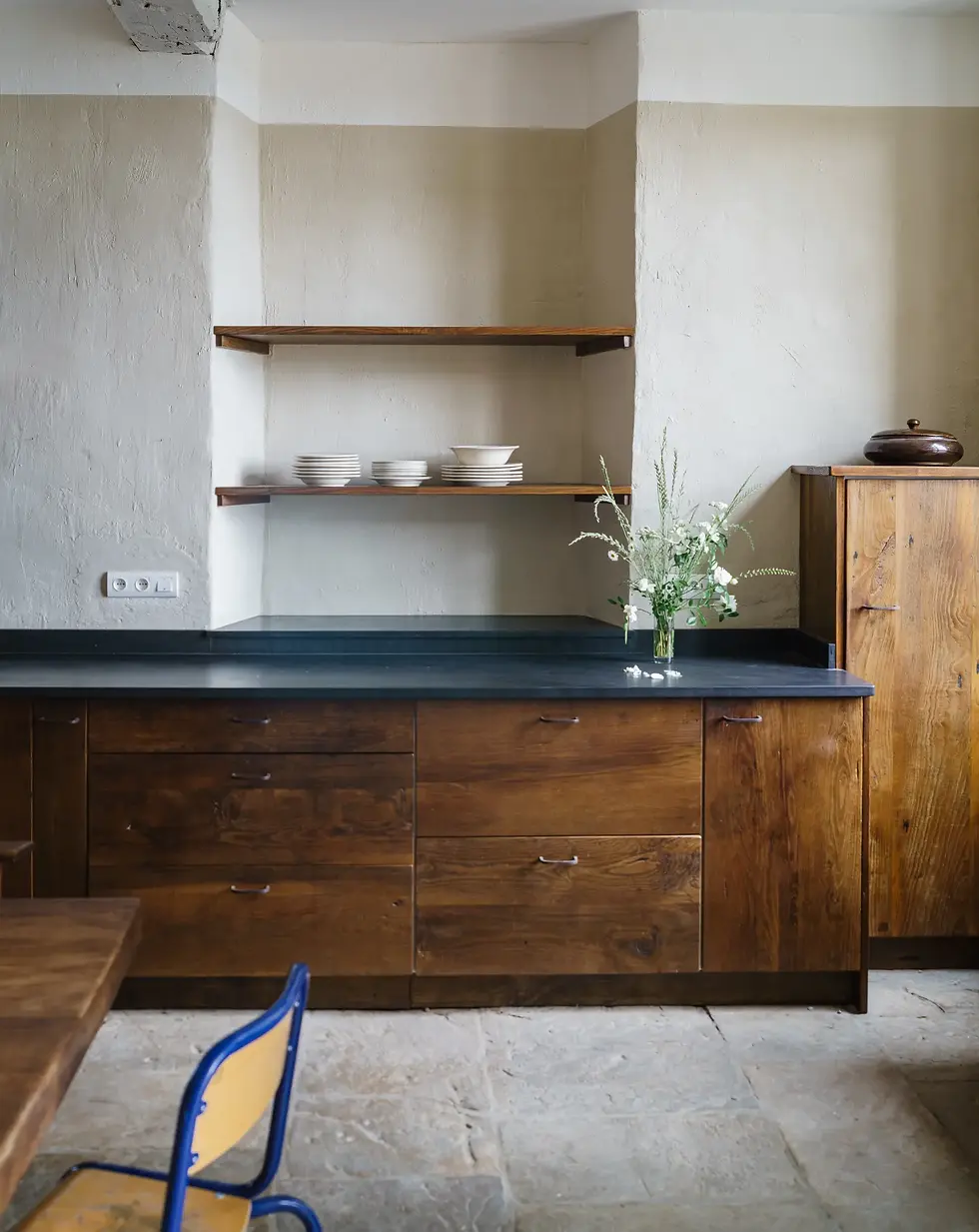
Reconfiguration of spaces, optimisation of light and circulation, bespoke design in harmony with the existing fabric. Historic floors, staircases, joinery, fireplaces, stuccowork, metalwork and mineral paints. Technical networks receive careful attention so that their interventions remain discreet. What was there before deserves to be revealed.
Extensions and additions
Designing an extension means rethinking the house as a whole: circulation, light, proportions. Either as a continuation of the existing building or using materials that enter into dialogue with it — brick, stone, timber, metal — contemporary expression adapts to the original fabric. An approach informed by our experience with Versailles and Île‑de‑France buildings.
Institutional clients
Local authorities, foundations and public bodies. Management of specific regulatory procedures and coordination with heritage stakeholders.
Condominiums & co-ownerships
Façade works, roofs, energy renovations, common areas and works in occupied buildings. Liaison with property managers, homeowners’ committees and contractors.
Private owners
Historic houses, Haussmannian apartments and period residences. Support from the initial survey through to project handover.

Our contacts
Private owners
Historic houses, Haussmannian apartments and period residences. Support from the initial survey through to project handover.
Condominiums & co-ownerships
Façade works, roofs, energy renovations, common areas and works in occupied buildings. Liaison with property managers, homeowners’ committees and contractors.

Institutional clients
Local authorities, foundations and public bodies. Management of specific regulatory procedures and coordination with heritage stakeholders.
