The architect contract: what you need to know before you sign.
- Antoine de Gironde
- May 28
- 4 min read
Signing a contract with an architect (project manager) is a binding act for both parties. It defines the scope of the mission, the fees, the responsibilities, and the conditions under which the project will be carried out. Understanding what this contract covers and what it entails is essential to the project's success. Our Expertise page details the seven stages of a full project management assignment.
The Order of Architects' standard contracts.
The National Council of the Order of Architects provides model contracts for private contracts: project management (maîtrise d'œuvre) agreements for new construction, for renovation, and for partial missions. These documents, regularly updated, define the scope of work, fees, the responsibilities of each party, and termination conditions. They form a proven contractual baseline that protects both the client and the architect.
Their use is not mandatory for private contracts, but it is strongly recommended. A contract drafted without reference to these models exposes both parties to ambiguities that can lead to costly disputes.
The different types of contract according to the nature of the project owner.
The nature of the project owner determines the applicable contractual framework. Three situations arise.
Public project owner
When the project owner is a local authority, a public institution, or an organization subject to public law, the architect’s assignment is governed by the MOP Act (Law No. 85-704 of 12 July 1985) on public project management. This law defines the mandatory mission elements, the methods of remuneration, and the rules for competitive tendering of design teams.
The contract is a public design services contract, governed by the Public Procurement Code. Fees are regulated by the project rate specified in the commitment document. The assignment is broken down into standardized phases (ESQ, APS, APD, PRO, ACT, EXE, DET, AOR), some of which are mandatory and others optional depending on the nature of the project.
Private project owner — legal entity: condominiums, companies, associations.
Condominiums make up a significant part of our activity. They are governed by the law of 10 July 1965 and its implementing decree. The decision to entrust a mission to an architect acting as project manager is taken by the general meeting of co‑owners, according to majority rules that vary depending on the type of work. Our Expertise page details our specific approach for condominiums: façades, exterior cleaning/renovation (ravalement), roofs, and common areas.
The contract is signed by the property manager (syndic), mandated by the general meeting. It must specify the exact nature of the assignment, its scope (common areas only, or common and private areas), and the reporting arrangements to the condominium council (conseil syndical).
For civil real estate companies (SCI) and associations, the contract is signed by the authorized legal representative. Internal decision‑making procedures of the entity must be checked before any signature.
Private project owner — natural person: the individual
This is the most common situation for owner‑occupiers and buy‑to‑let owners. The contract is signed directly between the individual and the architect. In this context the architect’s duty to advise is strongest: the individual is not a construction professional, and the architect must ensure they fully understand the mission entrusted, the commitments made, and the consequences of the choices taken.
The contract must be clear about fees and how they are calculated, the phases included in the scope of work, which incidental costs are excluded, the expected timetable, and the conditions for modification or termination. Any ambiguity on these points is a frequent source of disputes.
The duty to advise: a legal obligation from the first consultation.
The architect is bound by a duty to advise their client. This obligation, recognized by case law, applies from the very first contact, long before the contract is signed. It means the architect must inform the client of the regulatory constraints applicable to the project, any technical risks identifiable at the diagnostic stage, and the foreseeable timelines and costs.
In heritage areas this duty of advice is particularly important: constraints from the PSMV (safeguarding and enhancement plan), prescriptions from the ABF (heritage/buildings authority), and processing times are elements the project owner must know before committing. Ignoring them exposes one to surprises during the project that can call the program or budget into question.
Insurance: what the architect must provide
Every architect is required to take out professional liability insurance and ten‑year liability insurance. Atelier d'Architecture Antoine de Gironde is insured with the MAF (Mutuelle des Architectes Français). The certificate of insurance is provided to the project owner when the project-management contract is signed.
The project owner must, for their part, take out a "dommages‑ouvrage" insurance policy before work begins. This legal obligation is often unknown to private individuals, and its absence can have serious consequences in the event of a claim covered by the ten‑year guarantee.
Our approach: a contract that aligns interests
Our contracts are based on the model agreements of the Order of Architects, respecting their structure and guarantees. Their clauses, however, are drafted to create a convergence of interests between the project manager (architect) and the client.
The architect acting as project manager is not just any service provider. Their mission is to run the project in the name and on behalf of the client, defending the client's interests at every stage — with contractors, with permitting authorities, and when unexpected issues arise on site. The contract must reflect this reality: a mandate relationship founded on trust, in which one party’s success is inseparable from the other’s.
This convergence of interests is reflected concretely in the project's financial monitoring and in the handover/acceptance of the works.
This is the spirit in which we carry out each of our assignments. To learn more, see our Expertise page or contact us to arrange an initial discussion.
To go further
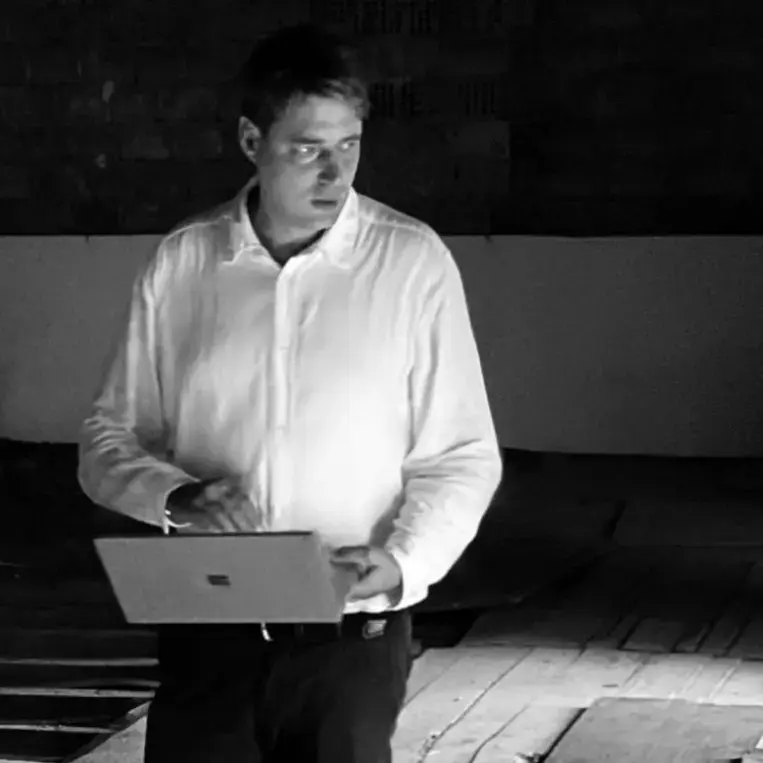
Antoine de Gironde
Architecte DESA — Registered with the Order of Architects n°084305
Atelier d'Architecture Antoine de Gironde
10 rue de Fontenay, 78000 Versailles
